
EICR Codes Explained: C1, C2, C3 and FI
What each code means, what action is required, and how the overall outcome is determined. Includes an interactive observation coding tool based on Best Practice Guide 4.
What are EICR codes?
Every observation recorded on an Electrical Installation Condition Report (EICR) is classified using one of four standard codes.
The code tells you — and any future inspector — how serious the observation is, what action is required, and how it affects the overall outcome of the report.
The four codes are C1, C2, C3 and FI. They are defined in BS 7671 and used consistently across all EICR reports in the UK.
An EICR should be a safety report, not a wish list of upgrades. If you are comparing advertised prices, our guide to cheap EICR Leicester explains what can happen after a low-cost inspection.
| Code | Meaning | Report outcome | Action required |
|---|---|---|---|
| C1 | Danger present | Unsatisfactory | Immediate |
| C2 | Potentially dangerous | Unsatisfactory | Urgent |
| C3 | Improvement recommended | Can be Satisfactory | Advisory |
| FI | Further investigation | Unsatisfactory | Investigate |
Danger Present
Immediate action required — report outcome: Unsatisfactory
A C1 observation means there is an immediate risk of electric shock or fire. The installation or affected circuit must be made safe without delay.
Any EICR containing a C1 observation is automatically classified as Unsatisfactory.
Typical C1 examples
- Live parts directly accessible — exposed conductors, missing consumer unit covers
- Severe overheating or fire damage where live parts are accessible or the installation is unsafe to leave energised
- Exposed-conductive-parts confirmed live
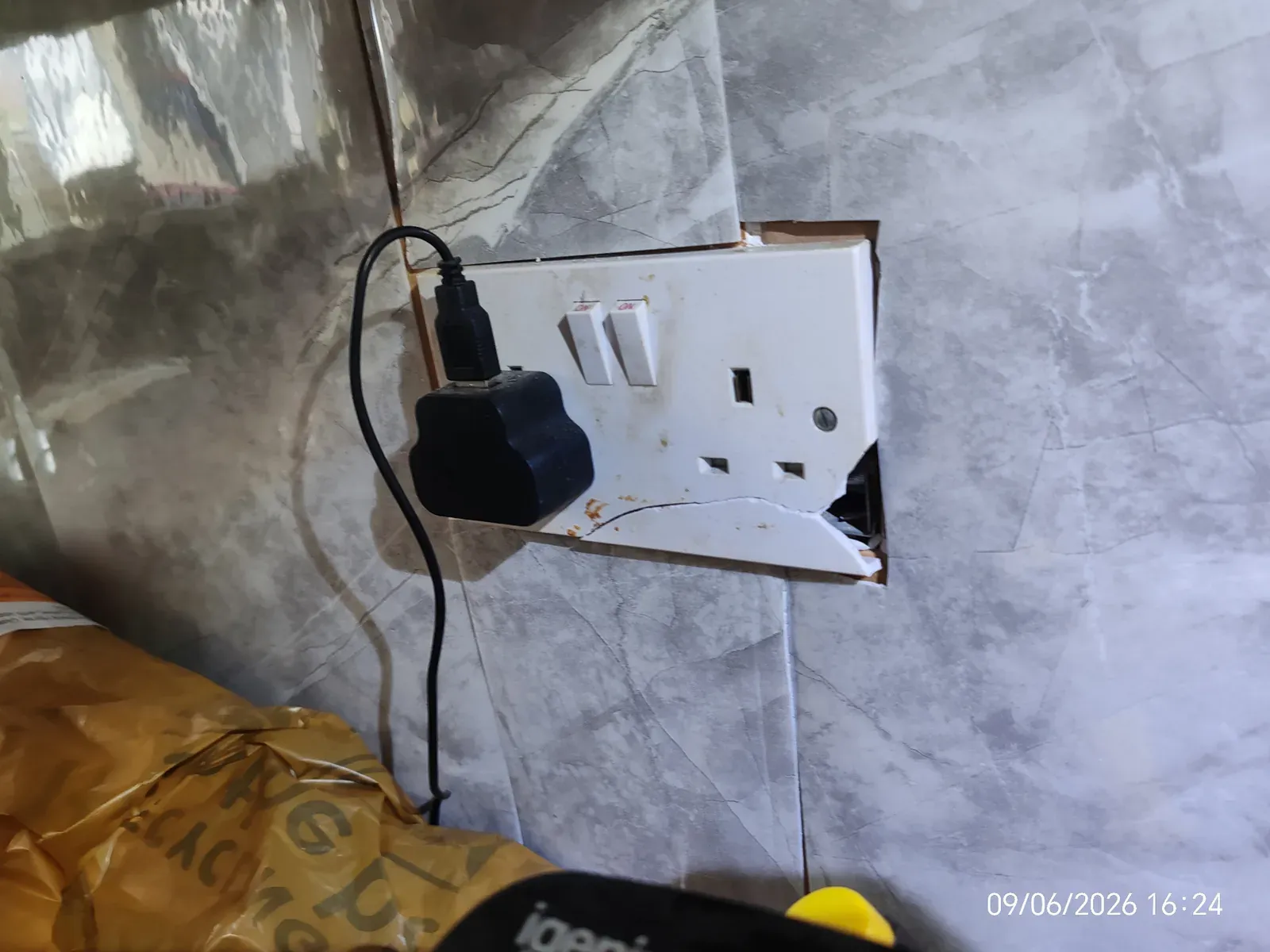
- Damaged accessory or enclosure with live parts directly accessible
Potentially Dangerous
Urgent remedial work required — report outcome: Unsatisfactory
A C2 observation means the defect is not an immediate danger in current conditions but could become dangerous if left unaddressed.
Any EICR containing a C2 observation is classified as Unsatisfactory until the defect is rectified and the installation re-verified.
Typical C2 examples
- Confirmed absence of an effective means of earthing
- RCD or RCBO failing to operate correctly under test
- Socket-outlet located within a prohibited bathroom zone
- Incorrect polarity, unless it presents immediate danger
- Bathroom circuit without additional RCD protection
- Absence of main protective bonding to a confirmed extraneous-conductive-part
- Earthing conductor undersized or defective
- No RCD additional protection for cables concealed at less than 50 mm depth
- High earth fault loop impedance — inadequate disconnection time
- Damaged accessory with live parts not directly accessible but protection compromised
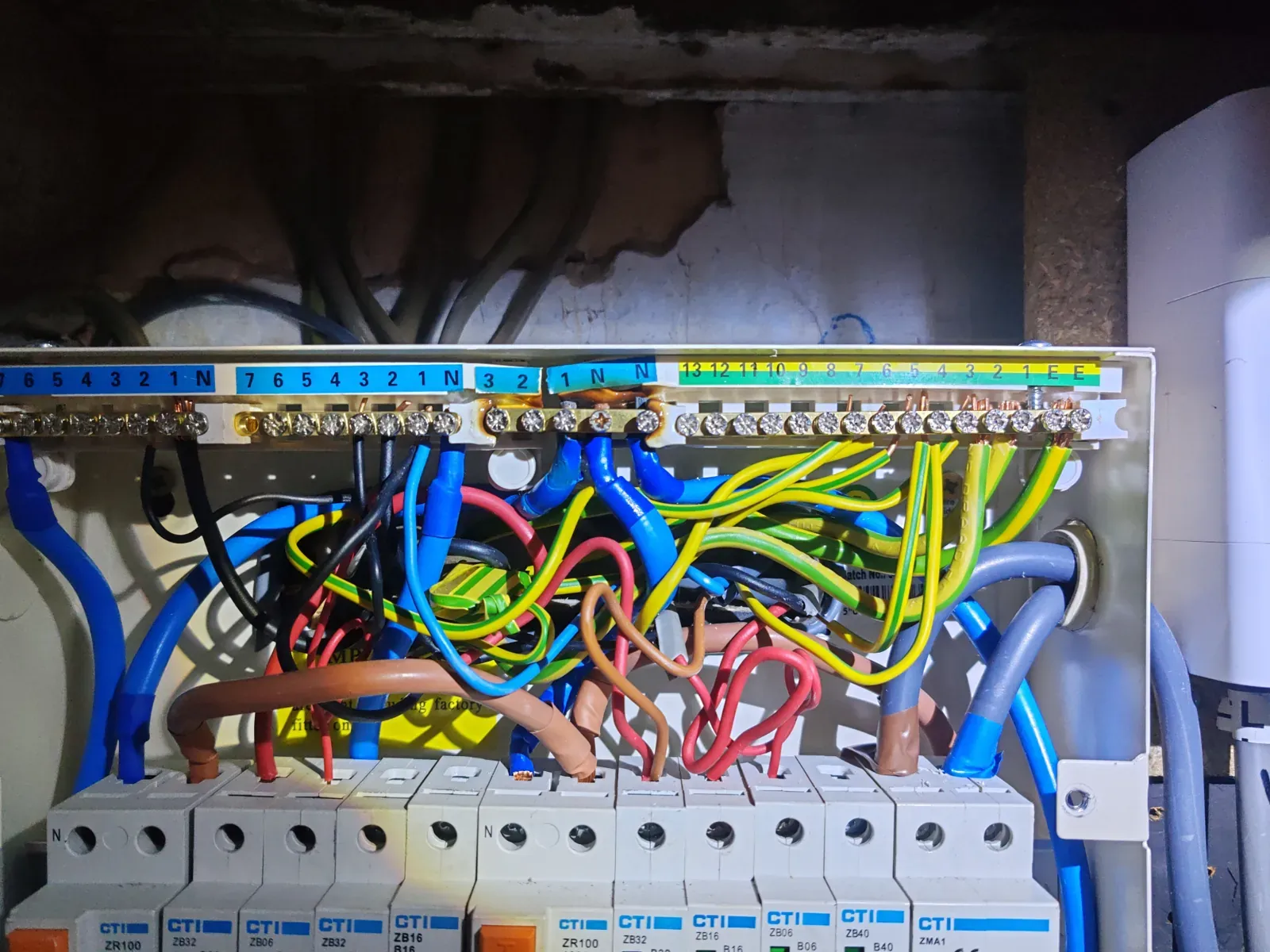
- Borrowed neutral
- Ring final circuit conductor discontinuity or cross-connection
Improvement Recommended
Not a failure — report can still be Satisfactory
A C3 observation is not a failure. It means the installation does not fully comply with current requirements but is not considered dangerous.
An EICR containing only C3 observations can still be issued as Satisfactory.
C3 is commonly applied to older installations that were installed correctly to the standards of the time but do not meet every current requirement.
Typical C3 examples
- No RCD additional protection for socket circuits on an older installation
- Type AC RCD installed where Type A is now required (default BPG4 position)
- No SPD installed where one is now recommended
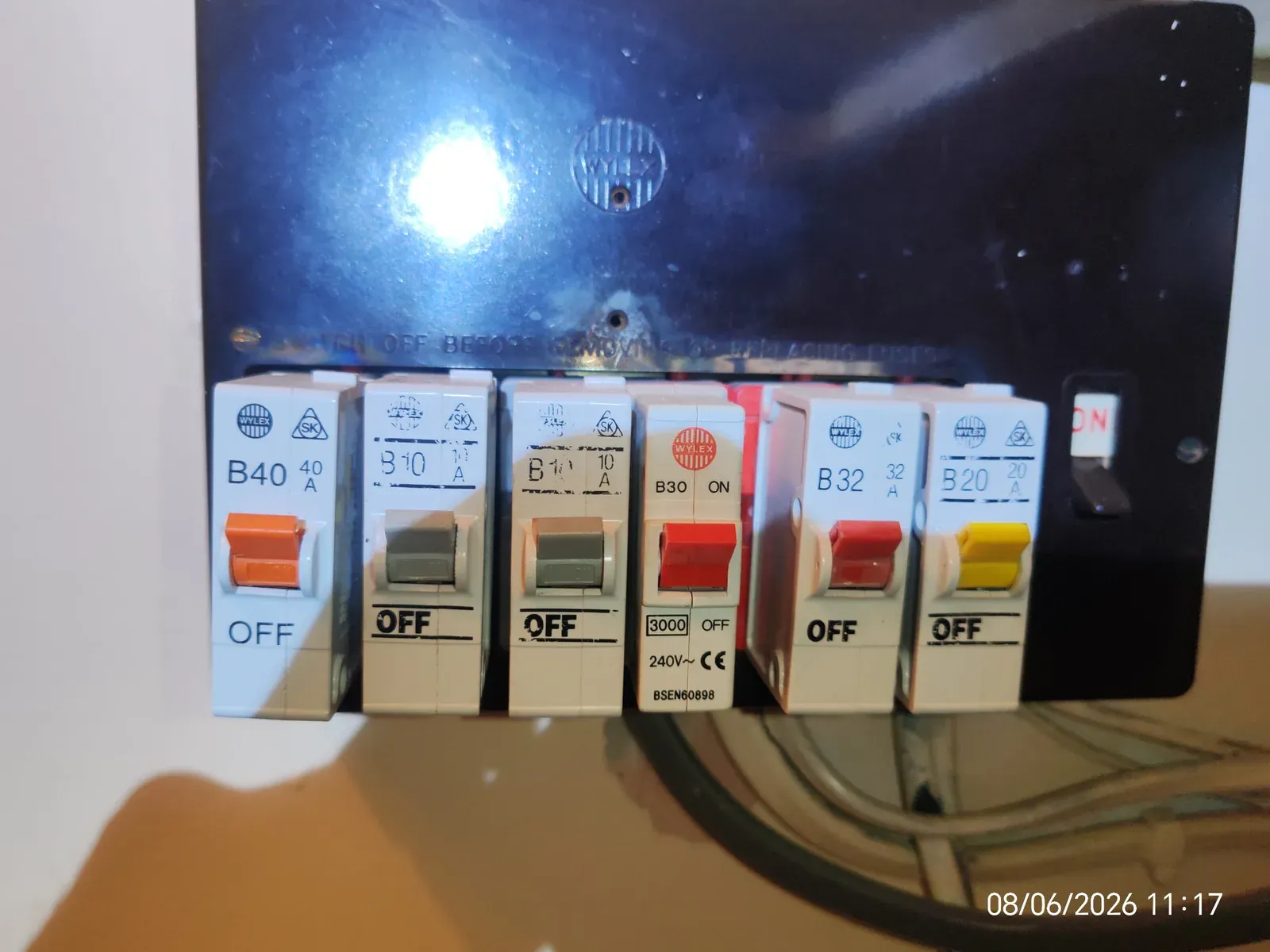
- Absence of circuit identification labels
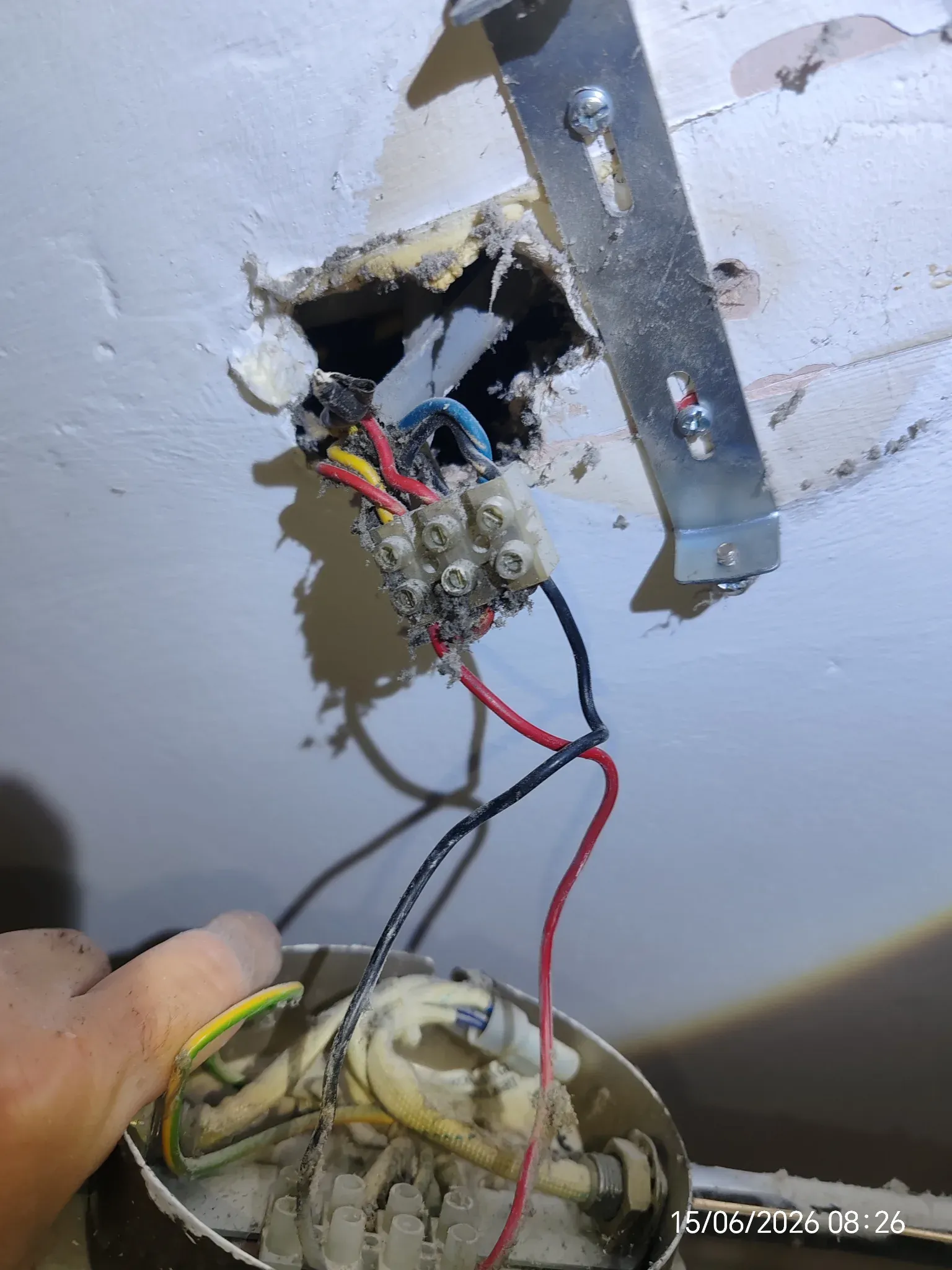
- No CPC at a lighting point where a Class II luminaire is currently fitted
- Wiring not adequately supported against collapse in a fire (general circuits)
Further Investigation Required
Must be investigated — report outcome: Unsatisfactory
FI means the inspector identified a potential issue but could not fully assess it during the inspection — due to inaccessible areas, inconclusive test results, or a condition that requires specialist investigation.
An FI observation results in an Unsatisfactory report until the investigation is completed and the observation is re-classified.
Typical FI examples
- Bonding connection inaccessible — continuity could not be confirmed
- Low insulation resistance reading that may be influenced by connected equipment
- Inaccessible sections of wiring where condition is unknown
- Test results suggesting a possible hidden fault requiring further access
What is R1+R2 on an EICR?
R1+R2 is a continuity test carried out during EICR testing on each circuit. The result is used to calculate the earth fault loop impedance (Zs) for the circuit. R1+R2 is a test result, not a code.
How EICR outcomes are determined
The overall outcome of an EICR is either Satisfactory or Unsatisfactory. The result depends entirely on which observation codes are recorded.
Select an observation to explore
This tool covers the most common EICR observations across domestic and light commercial installations. It is based on Best Practice Guide 4 (BPG4) style coding logic produced by Electrical Safety First. Not every possible observation is included — where an observation is not listed, or where the tool indicates further assessment is needed, inspector judgement and reference to BS 7671 and BPG4 apply.
EICR Observation Code Helper
Select a category and observation above to see the likely code and suggested wording.
Frequently asked questions
No — and it is important to be clear about this. This tool provides guidance based on Best Practice Guide 4 (Issue 7.2). It helps you explore likely coding for common observations, but it does not know the specific details of the installation in front of you, the results of your tests, or the conditions present at the time of inspection. Final classification of every observation always remains the responsibility of the qualified and competent inspector. No tool, checklist or software can substitute for professional judgement, experience, and thorough inspection and testing.
No. This is one of the most persistent myths in the electrical inspection industry, and it is important to address it clearly. A plastic consumer unit is not a codeable defect by virtue of its material alone. Best Practice Guide 4 style guidance is explicit on this point. The defect — if any exists — must be identified and coded. If the consumer unit has missing blanks, is damaged, shows signs of overheating, has poor assembly, or is located in a position presenting a specific fire risk, those issues should each be assessed and coded on their merits. Where no other defect is identified, a plastic consumer unit is not codeable. Incorrectly coding a plastic consumer unit without a specific defect misleads clients and is not consistent with BPG4 Issue 7.2. See also: PRS 2025 EICR update guide.
Best Practice Guide 4 Issue 7.2 classifies a Type AC RCD installed where Type A is required as C3, and that is the default position used by this tool. Final classification remains the inspector's judgement. A Type AC RCD provides residual current protection but does not detect pulsating DC residual currents. BPG4 Issue 7.2 classifies this departure as C3.
No. Main protective bonding is only required to extraneous-conductive-parts — parts that introduce a potential from outside the installation into the building. Not all metallic services, sinks, baths or pipework qualify as extraneous-conductive-parts. For example, a metallic sink connected only to plastic pipework does not introduce an external potential and is therefore not an extraneous-conductive-part requiring main bonding. Automatically coding the absence of bonding to such parts is incorrect and can mislead clients. Before applying any bonding code, the inspector must confirm the nature of the service or part in question.
Because the risk presented by a defect often depends on the specific circumstances of the installation and the condition of the installation at the time of inspection. This is at the heart of Best Practice Guide 4 (Issue 7.2) — the defect is coded, and the code reflects the actual risk presented, not a blanket rule. For example, a damaged outdoor accessory presents an immediate danger (C1) if live parts are directly accessible through the damage, but a significant risk requiring urgent attention (C2) if the enclosure is damaged but live parts remain inaccessible. This is why the tool asks conditional questions for certain observations — the same fault can present very different levels of risk in different scenarios.
Best Practice Guide 4 (BPG4) is a guidance document produced by Electrical Safety First in collaboration with industry bodies including the ECA, NAPIT, NICEIC and others. It provides guidance to help inspectors apply consistent and appropriate coding to EICR observations. BPG4 encourages a defect-based, risk-assessed approach to coding rather than blanket rules based on age or materials. It uses the C1, C2, C3 and FI code system defined by BS 7671 and the model forms. This tool uses BPG4 Issue 7.2 as its default approach. See also: our EICR information hub and landlord EICR information.
Real EICR findings from recent inspections
The photos below are from actual EICR inspections carried out in Leicester and surrounding areas. Each illustrates a type of observation that appears regularly during domestic inspections.
Book an EICR in Leicester
From £180 inc VAT. NICEIC certified. Landlord compliant.